Dental implants in Vienna 1220
An implant replaces the root of a missing tooth. Dr. Markiel Haimov plans it on a 3D X-ray. As a dental technician, he also knows how the crown on top of it is made.
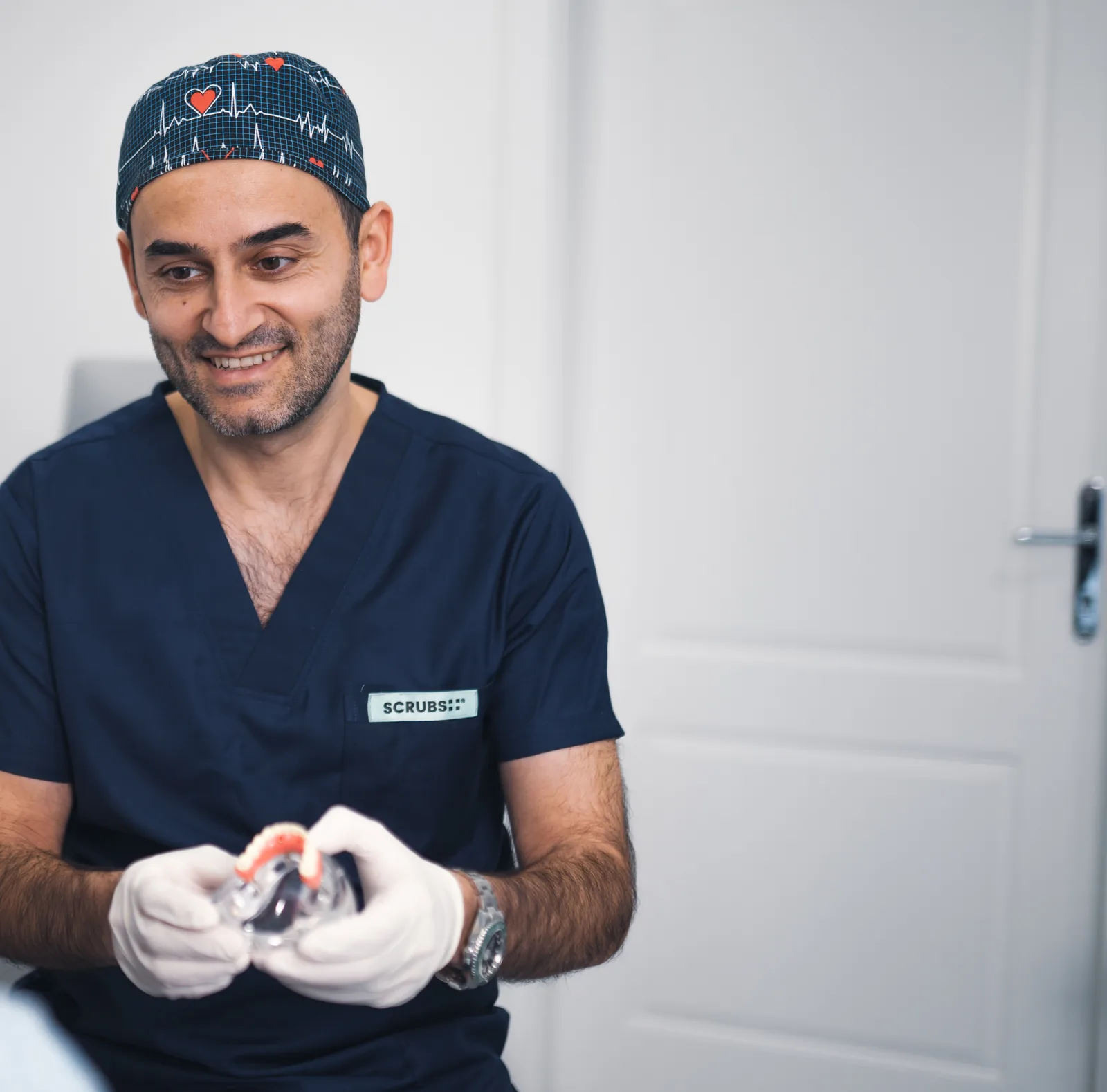
Implant, abutment, crown
A dental implant has three parts. The implant body, a titanium screw, sits in the jawbone and heals into it. The abutment sits on the implant, and the crown sits on the abutment.
A single implant carries one crown. For a larger gap, two implants carry a bridge. The neighbouring teeth are not ground down for this.
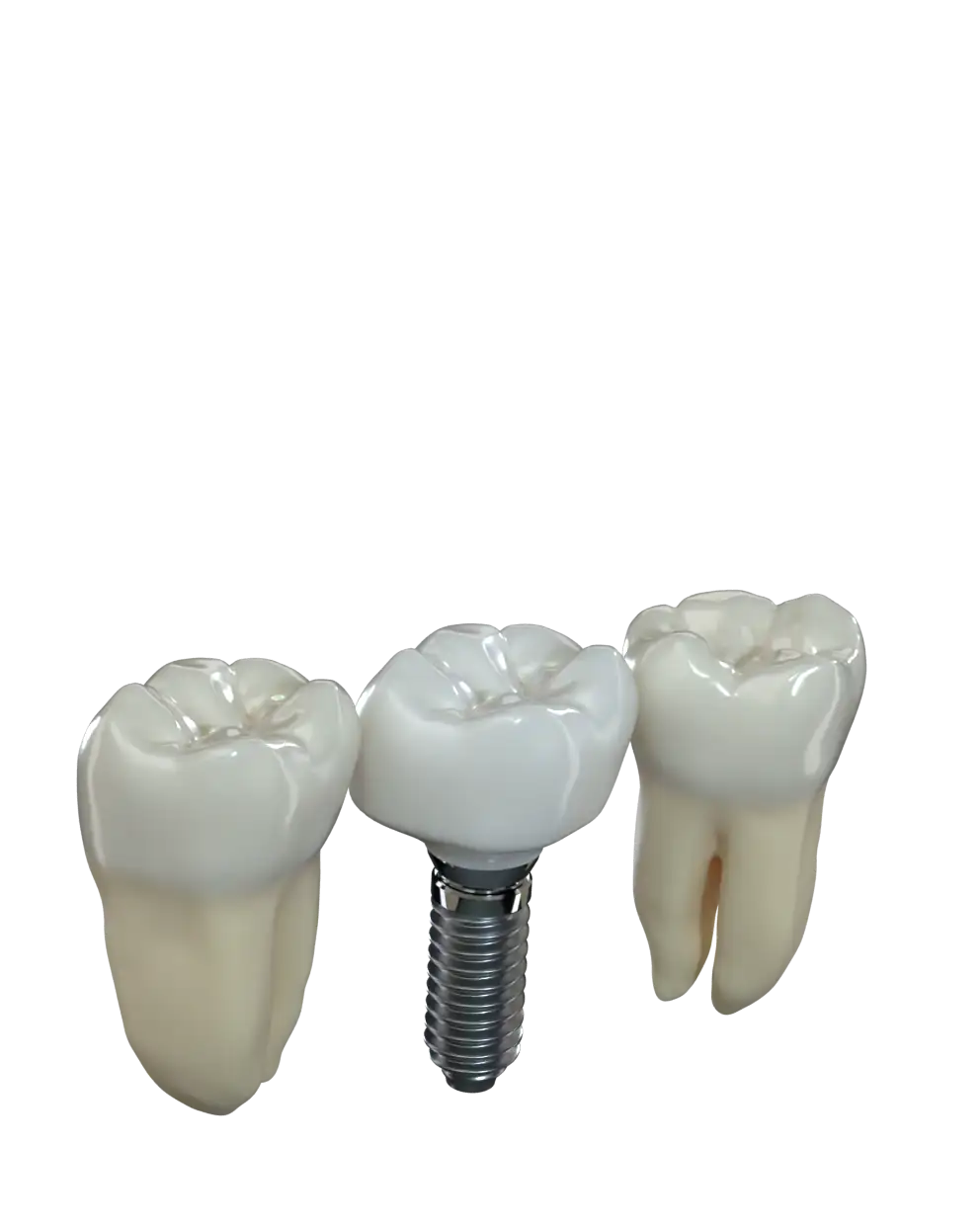
Erika, patient
„Da war schon ein Ersatzzahn möglich, der rein und raus. Aber für mich stand außer Frage, dass es ein Implantat sein muss.“
Translation: A removable replacement tooth was possible. But for me there was no question that it had to be an implant.
When an implant is an option
When a tooth has been lost to decay, periodontitis or an accident, or has to be extracted.
Gums and jawbone must be healthy for this. Gum inflammation or periodontitis is treated first.
Smoking, diabetes, osteoporosis, some medicines and chemotherapy raise the risk. That is why we ask about your illnesses and medicines before planning.
Four steps
Consultation and 3D X-ray
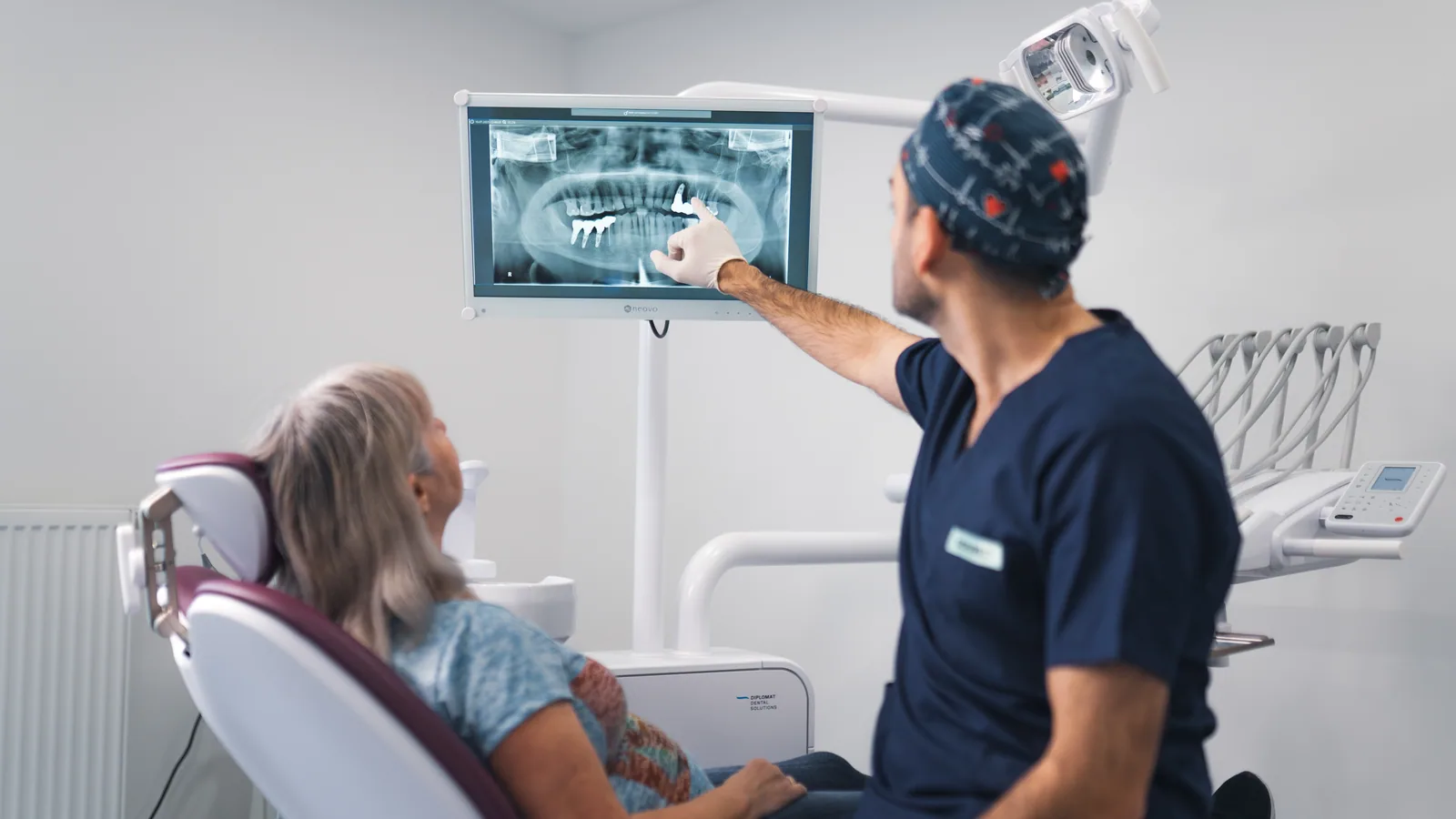
We examine teeth, gums and bone. A CBCT scan shows how much bone there is and where the nerves run.
Planning and cost plan
We go through the results with you on screen. You receive a written treatment and cost plan (Heil- und Kostenplan) before treatment starts.
Implant placement
The implant is placed in the bone under local anaesthetic. You usually go home the same day.
Healing and crown
The implant heals into the bone. During this time you receive a temporary replacement if needed. Then the crown or bridge is fixed.
Duration and anaesthesia
- Anaesthesia
- local, sedation on request
- Procedure
- outpatient, home the same day
- Healing time
- usually 3 to 6 months
- Afterwards
- check-ups at the practice
If a tooth is extracted, the implant can sometimes be placed straight away. More often you wait a few weeks to months until the bone has healed. If bone is missing, it is built up first.
In the first days after the procedure, a feeling of pressure, swelling and mild discomfort are usual. If you have a fever or severe pain, call us.
Costs and insurance
In Austria, implants are a private treatment.
The Austrian Health Insurance Fund (ÖGK) pays a subsidy only in special medical cases and after approval in advance.
The cost depends on the number of implants, the bone and any preliminary treatment. Before treatment starts you receive a written treatment and cost plan. Payment in instalments is possible by arrangement.
You can claim the cost of dental prosthetics in your tax return as an extraordinary expense (außergewöhnliche Belastung), to the extent it exceeds your deductible (Selbstbehalt).
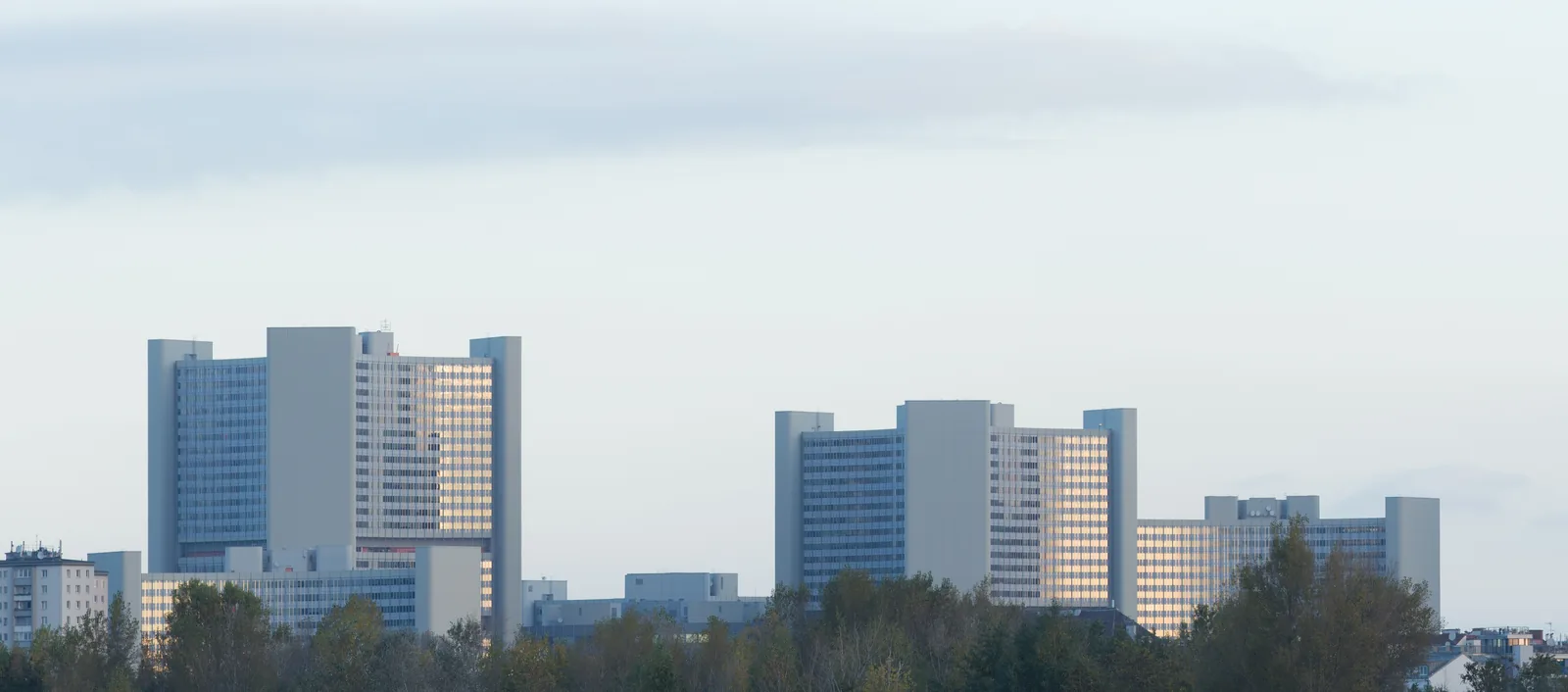
From further away
Patients also come from Gerasdorf, Korneuburg and Klosterneuburg. The practice is on the U1, at Kaisermühlen-VIC station.
Frequently asked questions
How long does it take from extraction to implant?
Sometimes the implant is placed straight after the extraction. Usually you wait a few weeks to months until the bone has healed. After that the implant needs time to heal in before the crown is fitted.
Does the ÖGK cover the cost of dental implants?
Usually not. Implants are a private treatment. There is a subsidy only in special medical cases that the ÖGK approves in advance.
Implant or bridge?
For a bridge on your own teeth, the neighbouring teeth are ground down. An implant replaces the tooth on its own and loads the jawbone like a natural root. We discuss which option suits you using the 3D X-ray.
Does an implant procedure hurt?
The procedure is done under local anaesthetic, with sedation on request. In the first days afterwards, a feeling of pressure and mild discomfort are usual.
How long does an implant last?
Many years with good oral hygiene and regular check-ups. Smoking and inflammation around the implant (peri-implantitis) shorten its life.