
Veneers and crowns
A veneer is a thin ceramic shell on the front of a tooth. A crown covers the whole tooth. A veneer needs little tooth structure removed, a crown more.
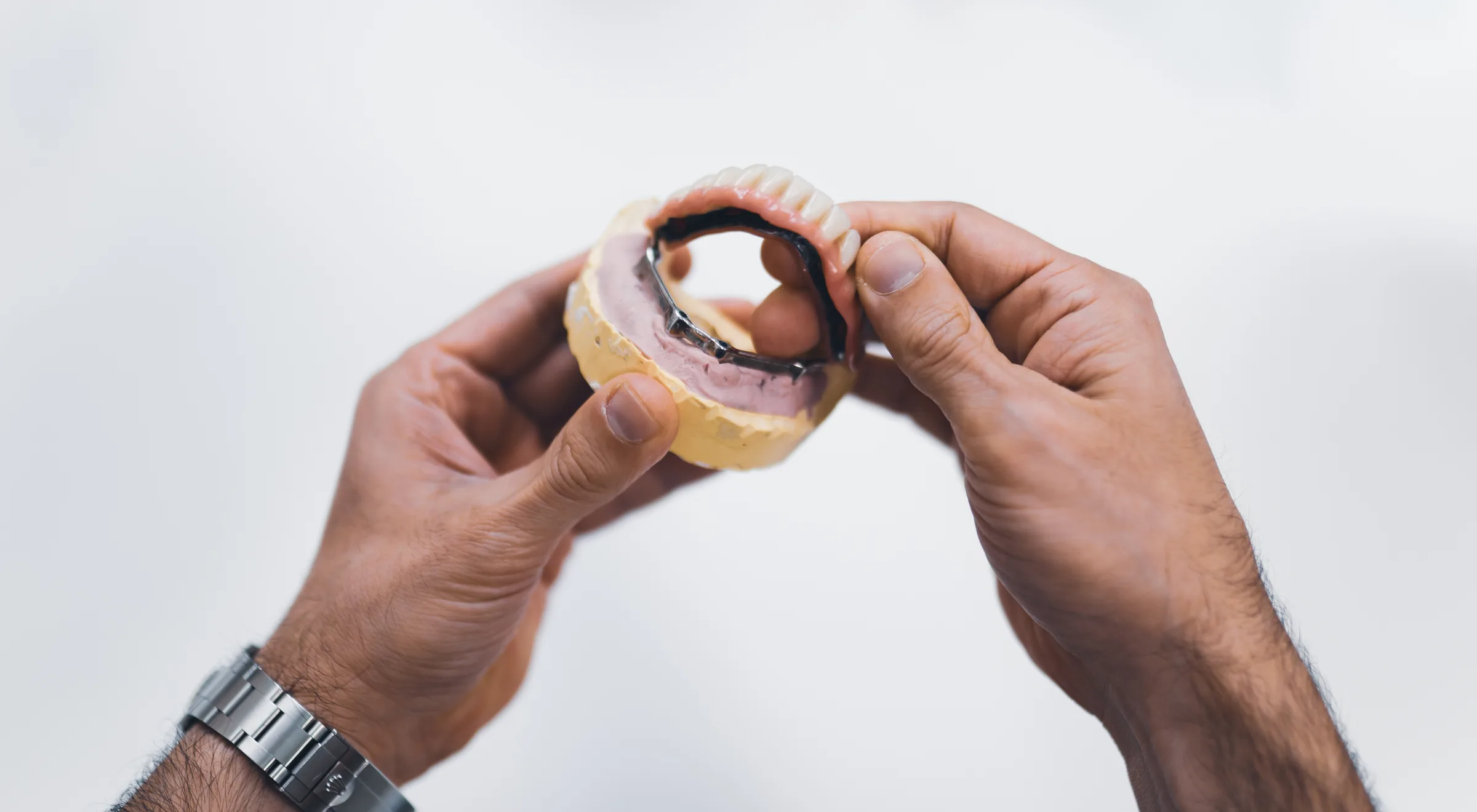
Veneers
Veneers correct the colour and shape of the front teeth: discoloured, too short or chipped teeth, small gaps, erosion on the surface.
When veneers are an option
The teeth must be free of decay and the gums free of inflammation.
With very thin enamel, heavy tooth grinding or heavily filled teeth, a crown is usually the better choice. With severely crowded teeth, a brace usually helps more.
Grey teeth can be whitened from the inside first. Otherwise the dark colour shows through the ceramic.
Procedure in two sessions
Planning
Your teeth are photographed and the new shape is designed on the computer. A temporary shows you the result in your mouth before the veneers are made.
First session
A thin layer of enamel, about half a millimetre, is removed from the front of the teeth. Then an impression is taken. Until the second session you wear plastic veneers.
Second session
The ceramic shells are bonded on and cured with light, about 30 minutes per tooth.

Crowns
A crown protects a tooth that is too damaged for a filling or an inlay, often after root canal treatment. On an implant, it replaces the visible tooth.
A ceramic crown can be made at the practice and fitted in the same session. A scanner records the tooth digitally, without impression material. No temporary is needed.
Dr. Markiel Haimov is a dentist and a dental technician. He plans the crown and knows how it is made.
Duration and anaesthesia
- Veneers
- two sessions, bonding about 30 minutes per tooth
- Crown in one session
- about 90 to 120 minutes
- Anaesthesia
- local, where tooth structure is removed
Costs and insurance
Veneers count as an aesthetic treatment and are usually not paid for by health insurance.
Crowns and bridges are fixed prosthetics and in Austria are in principle a private treatment. The Austrian Health Insurance Fund (ÖGK) pays a subsidy only in special medical cases.
Before treatment starts you receive a written treatment and cost plan (Heil- und Kostenplan). You can submit it to your insurer in advance.
Frequently asked questions
What are the disadvantages of veneers?
Enamel is removed for veneers, and that cannot be undone. They need two sessions, and health insurance usually does not pay for them.
How long do veneers last?
Ceramic veneers last many years with good care. Tooth grinding and oral hygiene play a part. A veneer can be replaced.
Do teeth have to be ground down for veneers?
Yes, a little: about half a millimetre on the front. Much more is removed for a crown.
Veneer or crown?
For a healthy tooth whose colour or shape bothers you, usually the veneer. For a heavily filled or weakened tooth, the crown.
How do I care for veneers?
Like your own teeth: brush twice a day, floss daily, have a professional cleaning once a year.